My Body Was Talking. I Just Didn't Know What It Was Saying | What's In My MS Care Kit
This blog post may contain affiliate links. I earn a small commission on your purchase, at no cost to you.
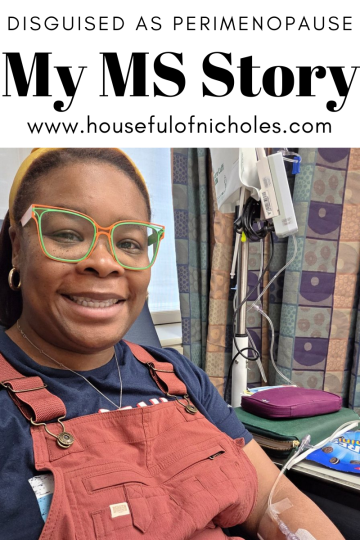
In October 2025, I was diagnosed with Multiple Sclerosis.
I've wrestled with how to write that sentence for a while now. Not because I'm ashamed of it, but because it comes with a footnote that I think a lot of women — especially Black women — are going to recognize: I spent more than six years explaining my symptoms away. The fatigue? Grief. The brain fog? Perimenopause. The days when my body just wouldn't cooperate? Stress. I'm running a farm, raising kids, keeping a marriage alive, building something from the ground up in a neighborhood that deserves it. Of course, I'm tired. Of course, I'm foggy. Of course.
Except it wasn't just that.
My body was talking the whole time. I just didn't have the right translator.
I'm not here to relitigate the diagnosis journey today — you can read that >HERE<. What I am here to do is tell you what's actually in my care kit now that I know what I'm managing. Because when I went looking for real talk about what helps with day-to-day MS life, I found a lot of clinical lists and not many people just saying what works. Mostly because everyone is so doggone secretive about their issues. We all know I'm all about sharing the things that make me more comfortable after a medical diagnosis slaps me upside the head. So here's mine.
What's Actually In My MS Care Kit
1. A Quality Heating Pad
Heat and MS have a complicated relationship, and I want to be upfront about that. It's an abusive relationship if I'm being transparent. Heat kicks my butt, royally. Going back in my FB memories and seeing how I had complete meltdowns during super hot days. For some people, too much heat will trigger symptoms — look up Uhthoff's phenomenon if you want to understand why your body rebels in summer. But targeted heat on spastic, tight muscles after a long day? That's different. I use mine for the back and leg tightness that shows up when I've pushed past what my body was asking for — which, if I'm being honest, I still do more than I should. Hello, urban farm!!
2. Cooling Towels/Cooling Vest
Chicago summers used to just be inconvenient. Now they're something I actually have to plan around. I keep cooling towels in my bag, my car, and the farm. If your symptoms spike in the heat, a cooling vest is worth the investment. I resisted for a while because I didn't want to need it, AND who wants to put ANOTHER layer on? Then I needed it. Get the vest.
3. A Good Pill Organizer
Not glamorous. Completely necessary. Between my DMT, supplements, and the other things I'm managing, "did I take that already?" is not a game I can afford to play. A weekly organizer with AM/PM slots is the kind of boring that keeps your life running. Get one. Use it. I'm still getting used to mine, so I also use my Samsung Health Alarm to alert me. It has come to this.
4. Compression Socks
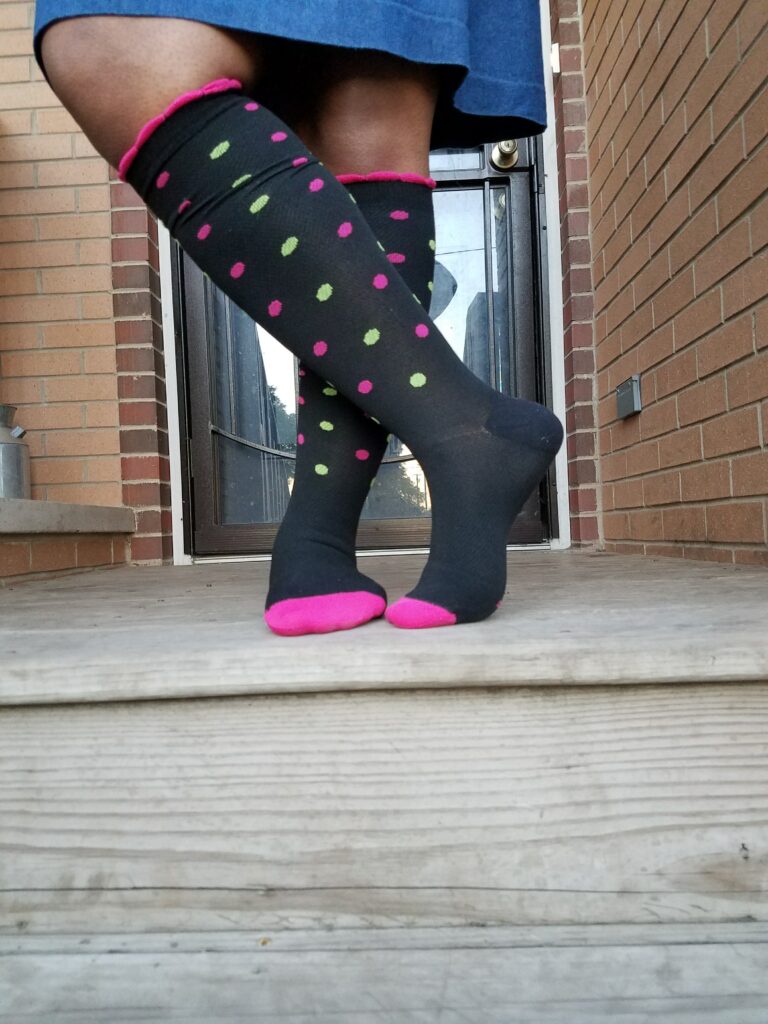
I've been a fan of compression socks for a LONG time. I've turned into a super fan with the combo compression/cooling socks. With as much flying as I do, they were necessary. I have more than 10 pairs floating around this house, and I always keep a pair in my car for road trips. On high-fatigue days when my circulation feels like it's working at half-speed, compression socks make a real difference in how my legs feel by evening. Get the ones with the fun prints. You might as well enjoy them.
5. A Reusable Water Bottle You Will Actually Use
Hydration touches everything: fatigue, spasticity, cognition, and I will absolutely forget to drink water if it's not physically in front of my face. I keep one on my nightstand, one in whatever room I'm working in, and one at the farm. This is not optional. Your nervous system needs water to function, and it will rudely remind you when it's not getting enough. Don't question how many I have. Just worry about yourself. I use YETI because it's guaranteed to keep things cold for the entire day.

6. Resistance Bands
On good days, movement helps. On not-so-good days, gentle movement still helps. Resistance bands are low-impact, don't require a gym, and can be used sitting or lying down. They've kept my muscles from completely checking out during the stretches when I can't do more. What I've learned is that "I can't exercise today" and "I can do five minutes of light resistance work" are two different statements, and the second one usually leaves me feeling more human. My husband has some that came with our P90X set, so I didn't have to purchase a new set.
7. Blue Light Blocking Glasses
MS fatigue and screen time are not compatible, and I spend a significant portion of my life looking at screens. The glasses don't fix the fatigue, but they take the edge off the eye strain that turns a manageable afternoon into a headache by 7pm. Small thing. Real difference. I actually picked some up at Target several years ago because they made me look cute. Look at me needing them now.
8. A Grabber/Reacher Tool
This one I resisted the hardest. Mostly because I didn't want anyone looking at me and thinking that I was lazy. A grabber tool felt like giving something up. But here's what I've actually given up by not using it on the days I needed it: energy. That's it. Bending down to pick something up off the floor when my body is already running a deficit costs me more than people realize. The grabber is not defeat. It is resource management. It's also something I already had on the farm for quick cleaning.
9. A Symptom Journal
Track your symptoms. I don't care if it's a notebook, an app, or a notes file on your phone write it down. Fatigue level, what spiked it, how you slept, what stressed you out. Because your neurologist is going to ask how you've been, and your brain is going to go completely blank, and you're going to say "fine" when you have six weeks of data that says otherwise. I know this because I have done this. I use a Hobonichi Weeks planner journal to keep track of everything. When I have everything at my fingertips, I don't have to worry about my brain fog keeping me from great care.
10. Patience
This one isn't on Amazon. And it's the one I'm worst at. See my hysterectomy post.
I spent six years pushing through symptoms I didn't understand. My default is to work harder, push further, figure it out. MS has been very clear with me that that particular approach has consequences now. Some days, the win is that I got up. Some days rest is the whole job. I'm still learning to let that be enough — not to narrate it as failure, not to compare my output to what it was before October, and to give my body the same grace I'd give anyone else navigating something new and hard.
Still working on it. Every single week.
If something on this list helps even one person feel less alone in the figuring-it-out phase, it was worth writing. And if you've got something in your own kit that belongs here, tell me in the comments. I'm still building mine.
Want to understand more about what MS actually is and how it works? I broke it all down >here<.
Want to read my full diagnosis story? That post is >here<.